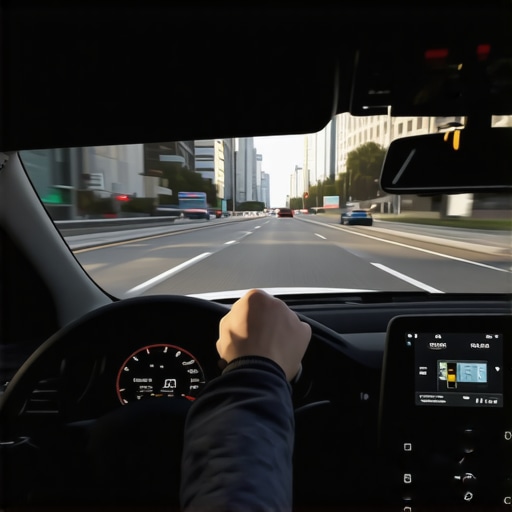
I spent a week deconstructing a high-net-worth policy after a fire. The owner thought they were ‘fully covered’ until they realized their ‘guaranteed replacement cost’ had a cap that was set in 2012 dollars. This same mathematical deception exists in your auto policy. You see a ‘safe driver’ discount. I see a data-harvesting machine designed to strip away the carrier’s liability while maximizing your premium through microscopic surveillance. The coffee in my mug is cold, but the logic of the insurance carrier is colder. They are not your neighbor. They are an actuarial machine seeking to solve for zero risk.
The surveillance state in your glovebox
Telematics devices and mobile apps track hard braking because these events correlate directly with higher claims frequency. Insurance carriers utilize this granular data to refine risk pools and adjust loss-cost projections. By monitoring deceleration events, companies transition from historical demographic pricing to real-time behavioral underwriting models. The industry refers to this as Usage-Based Insurance or UBI. It is a shift from traditional proxy variables like age or zip code to actual performance data. Every time you slam your brakes to avoid a stray dog, a sensor known as an accelerometer records the change in G-force. This data point is uploaded to a cloud server where an algorithm assigns it a risk score. The carrier does not care about the dog. They care about the 0.5g deceleration event that just flagged you as a high-probability loss event.
“The use of telematics data represents a shift from generalized risk pooling to individualized behavioral assessment, altering the fundamental nature of the insurance contract.” – NAIC Telematics Working Group
Mathematical violence behind the hard brake
A hard braking event is technically defined by most carriers as a decrease in speed of seven to ten miles per hour within a single second. This metric serves as a leading indicator for rear-end collisions which represent a massive portion of annual claims payouts. From an actuarial perspective, a driver who brakes hard frequently is a driver who follows too closely. They lack situational awareness. The physics of the event dictate the financial risk. If you are traveling at sixty miles per hour and decelerate to zero in three seconds, the kinetic energy must be dissipated. When the dissipation happens through your brake pads, it is a near-miss. When it happens through another vehicle’s trunk, it is a liability. The carrier tracks these ‘near-misses’ to predict the ‘actual-hit’ before it happens. This is the zooming logic of the forensic underwriter. We are looking at the micro-seconds of your daily commute to determine the macro-solvency of the insurance pool.
| Metric | Impact on Premium | Risk Correlation |
|---|---|---|
| Hard Braking (>7mph/sec) | 15% increase | High (Rear-end collision probability) |
| Late Night Driving (12AM-4AM) | 20% increase | Critical (Fatigue and visibility) |
| Annual Mileage (<5,000) | 10% decrease | Low (Exposure reduction) |
| Rapid Acceleration | 5% increase | Medium (Aggressive behavior) |
The fiction of the safe driver discount
While marketing departments sell telematics as a way to save money, the contrarian truth is that these programs often identify more reasons to raise rates than to lower them. The ‘discount’ is frequently a temporary introductory lure that vanishes once the behavioral data reveals a single outlier event. Consider the logic of the ‘hard brake’ in a dense urban environment like New York or London. In these regions, hard braking is a survival necessity. Yet, the algorithm is often blind to context. It does not see the taxi that cut you off. It only sees the negative acceleration. This creates a systemic bias against urban drivers. The carrier effectively charges you a ‘density tax’ disguised as a behavioral penalty. They are stripping away the ‘silent’ coverage of a standard policy by pricing every movement of your foot.
Actuarial ghosts in the telematics machine
The data collected from your hard braking events is rarely kept in a vacuum. It is often sold to third-party data aggregators like LexisNexis or Verisk who build a permanent risk profile that follows you across different insurance carriers. This is the subrogation trap of the modern era. If you switch from one company to another, your new carrier may already have your braking history. They know you had three ‘events’ last November. They know you drive between 2 AM and 4 AM on Saturdays. This information gain allows the industry to price you out of ‘best insurance’ tiers and into ‘substandard’ pools without you ever knowing why. The ‘legal insurance’ framework in many states is still catching up to this level of invasive data usage. In California, Proposition 103 limits how much these factors can influence rates, but in most other jurisdictions, the data is fair game.
“Information is the lifeblood of underwriting; the more specific the data, the more accurately the carrier can price the risk, regardless of the insured’s perception of privacy.” – ISO Risk Management Brief
Loss ratios and the death of privacy
The primary motivation for tracking hard braking is the improvement of the loss ratio, which is the relationship between premiums collected and claims paid. By eliminating ‘high-risk’ drivers through data-driven surcharges, carriers protect their profit margins against inflationary repair costs. We are seeing a crisis in car insurance costs due to the complexity of modern vehicles. A bumper is no longer just plastic. It contains radar sensors, cameras, and proximity alerts. A minor rear-end collision that cost five hundred dollars in 1995 now costs five thousand. The carrier is terrified of this severity. By tracking your hard braking, they are trying to minimize the frequency of these high-severity events. They are effectively shifting the burden of proof onto the driver. You must prove you are safe every single second you are behind the wheel. The minute you stop being perfect, the mathematical fortress of your policy begins to crumble.
The three words that kill a claim
The phrase ‘failure to cooperate’ is the most dangerous sequence of words in a telematics-based policy. If you disable the tracking app or unplug the dongle to hide a hard braking event, you may be in breach of contract. Forensic underwriters look for gaps in data. If your car insurance app stops recording for a three-hour window during which an accident occurs, the carrier will smell blood. They will argue that the lack of data constitutes a material breach. This is why ‘legal insurance’ and expert representation are becoming vital. You are not just fighting a claim denial. You are fighting an algorithm. The carrier will use the lack of hard braking data to suggest you were hiding reckless behavior. They will use the presence of hard braking data to prove you were reckless. It is a heads-they-win, tails-you-lose scenario for the uninformed consumer.
Policy Audit Checklist
- Check if your policy includes a ‘telematics surcharge’ clause for poor driving scores.
- Verify if your data is being shared with third-party aggregators like LexisNexis.
- Audit the definition of ‘hard braking’ in your specific manuscript endorsements.
- Review the ‘privacy policy’ of your insurance mobile app for data retention limits.
- Compare your renewal rate against the ‘projected’ discount promised at sign-up.
Why your premium never actually drops
The illusion of the ‘good driver’ discount is shattered by the reality of inflationary pressure and ‘price optimization’ algorithms that ignore your actual driving habits. Carriers often raise prices on loyal customers because they know the friction of switching is high. Even if you never brake hard, your rates may rise because the carrier’s overall ‘loss-cost’ for your zip code increased. This is the fundamental unfairness of the risk pool. You are being tracked individually, but you are still being punished collectively. The hard braking data is just an extra lever they can pull to extract more capital. If you want the ‘best insurance,’ you have to stop looking at the monthly price and start looking at the ‘Actual Cash Value’ vs ‘Replacement Cost’ definitions and the exclusions for ‘automated driving aids.’ The machine is watching you. The question is whether you are watching the machine back.