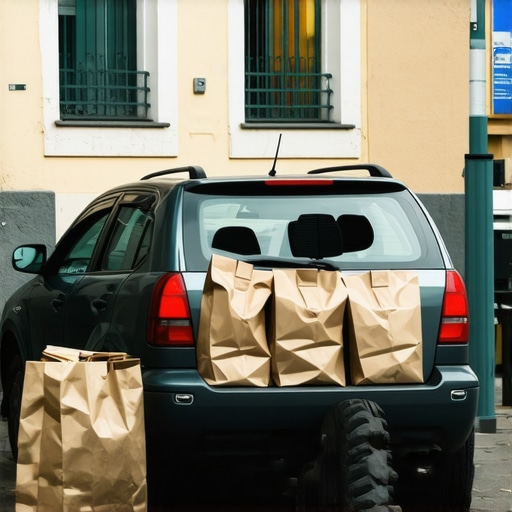
I recently reviewed a $50,000 property damage claim that was denied entirely because of a three-word endorsement buried on page 84 that the broker never even mentioned to the client. The driver was a college student delivering a single bag of burgers. Because the pizza delivery bag was visible in the back seat during the police report photos, the carrier invoked the commercial use exclusion and walked away from the obligation to defend. I smell the stale coffee of a thousand similar forensic audits. This is the reality of the gig economy meeting the rigid wall of actuarial math. Drivers believe they are covered by the app or their personal policy, but they are often operating in a total insurance vacuum.
The commercial use exclusion trap
Commercial use exclusions in a Personal Auto Policy (PAP) specifically void coverage during delivery activities. Using a personal vehicle for profit-seeking transportation of goods like food or parcels triggers a policy breach. Carriers view this as a material change in risk not reflected in the premium calculation. The standard personal contract is built for commuting and grocery runs, not the high-frequency exposure of urban logistics. If you fail to disclose that you are using your vehicle for income, you have essentially committed a soft form of insurance fraud. The underwriter accepted your premium based on the assumption that the car sits in a parking lot for eight hours a day. When you put that car on the road for ten hours of constant navigation and tight deadlines, the math of the original contract is shattered. The carrier has no legal requirement to honor a contract where the fundamental risk has been altered without notice.
Why personal policies fail in the delivery zone
Personal insurance policies are rated for commuting and pleasure use, not commercial delivery. Once a driver logs into a delivery application, the risk profile shifts to a livery operation. Most insurance carriers explicitly state that indemnification ends the moment the app is active, leaving the driver personally liable. This is the Period 1 danger. You are online, waiting for a ping, and your personal carrier will deny coverage because you are ‘available for hire.’ Simultaneously, the delivery app carrier might only provide contingent liability, which does not cover your own car. You are effectively driving a vehicle with zero collision coverage the moment you toggle that switch. Actuarial data shows that the probability of a claim increases by 300 percent during these periods due to the driver constantly checking a mobile interface.
“The primary purpose of a personal auto policy is to cover the non-commercial activities of the individual, and any deviation into commerce constitutes a material change in the risk originally underwritten.” – ISO Underwriting Standards Manual
The forensic path to claim denial
Forensic adjusters use digital footprints and metadata to confirm if a vehicle was used for commercial delivery during an accident. They review police reports, social media, and mobile phone records to identify livery activities. If an insured party lies about their activity, they face claim denial and policy rescission. I have seen adjusters count the number of miles driven between the last two oil changes and compare it to the reported commute distance. If the math does not add up, they will subpoena your records from companies like DoorDash or UberEats. There is no hiding the truth in the age of big data. Once the carrier proves you were in Period 2 or Period 3 of a delivery, they will send a reservation of rights letter and prepare to close the file without paying a cent. This leaves the driver responsible for legal fees, medical bills of the other party, and the remaining balance on their own car loan. It is a financial execution performed with a red pen.
“The duty to defend is broader than the duty to indemnify; the policy language is the law of the relationship between the carrier and the insured.” – Contractual Law Maxim
The math of the delivery risk
Actuarial data confirms that food delivery drivers experience a higher frequency of accidents than standard commuters. Frequent starts and stops, navigation distractions, and tight deadlines increase the probability of loss. This risk volatility is why personal car insurance premiums are insufficient for commercial logistics operations. Consider the loss-cost modeling. A standard driver might have a 1 in 50 chance of an accident annually. A delivery driver in a dense city has a 1 in 12 chance. No sane insurance company would accept the same premium for those two very different mathematical realities. While most people think a higher premium means ‘better’ insurance, the truth is that carriers often raise prices on loyal customers while stripping away ‘silent’ coverage in the fine print. They are pricing for the average, and delivery drivers are anything but average. They are high-intensity operators who require specific commercial endorsements to bridge the gap between risk and recovery.
The three words that kill a claim
Carrying for a fee is the specific phrase that destroys coverage eligibility for gig workers. Most standard ISO forms contain this exclusionary language to prevent personal policyholders from running a courier service. If an adjuster finds evidence of commercial activity, the denial of claim is mathematically certain. This exclusion is found in the ‘Part A: Liability’ section and repeated in the ‘Part D: Coverage for Damage to Your Auto’ section. It is a total blackout of coverage. It does not matter if the accident was the other person’s fault. If your carrier discovers you were ‘carrying for a fee,’ they may even refuse to represent you in a subrogation effort. This means you have to hire your own lawyer to go after the person who hit you. The contract you thought was a safety net is actually a sieve designed to let delivery risks fall through. In states like Florida or California, the legal precedent for upholding these exclusions is ironclad. The courts side with the carriers because the contract is a voluntary agreement that the driver violated the moment they accepted a delivery fee.
The gap in app based protection
App-based insurance provided by delivery platforms often contains significant gaps regarding collision coverage and deductibles. These policies frequently only trigger during active delivery and may ignore the waiting period. A driver without a commercial endorsement faces uninsured exposure during the gap periods between orders. Most drivers do not realize that the app insurance usually has a $1,000 or $2,500 deductible that is significantly higher than their personal policy. If you wreck your car, you are paying that out of pocket before the app insurance kicks in. Furthermore, that coverage usually only applies if you already carry collision coverage on your personal policy. If your personal carrier denies the underlying claim because of the livery exclusion, the app carrier may use that as a basis to deny their portion as well. It is a circular logic trap that leads to a total loss of assets. You are driving a $30,000 asset for a $5 delivery fee while risking a $100,000 liability. The math is offensive.
| Insurance Type | Risk Coverage | Primary Benefit | Typical Cost Increase | | :— | :— | :— | :— | | Personal Policy (PAP) | Non-commercial only | Commuting protection | Baseline premium | | Delivery App Insurance | Contingent Liability | Third-party protection | Included in app fee | | Business Use Endorsement | Occasional delivery | Partial gap coverage | 15 percent increase | | Commercial Auto Policy | Full livery use | Total indemnification | 50 percent or more |
Strategic solutions for the modern driver
Insurance solutions for gig workers require an explicit endorsement for business use or rideshare activities. This contractual addition acknowledges the increased risk and prevents the carrier from using the livery exclusion. Without this document, the policyholder is effectively uninsured during commercial hours. You must call your agent and be blunt. Ask them specifically if the policy allows for ‘food delivery via app.’ If they say yes, get it in writing. If they say no, you need a different carrier. Some modern companies now offer ‘Gig Economy’ riders that are affordable, but you have to seek them out. Do not assume your current carrier has your back. They are looking for reasons to not pay your claim, not reasons to help you. Audit your policy today before a fender bender turns into a life-altering financial judgment.
- Review the Exclusions section for the words Public or Livery Conveyance.
- Check the definitions of Your Covered Auto to see if business use is restricted.
- Identify if your state has specific Valued Policy Laws that affect commercial claims.
- Verify if the delivery app provides primary or excess coverage in your region.
- Obtain a written Gig Economy endorsement from your personal insurance provider.