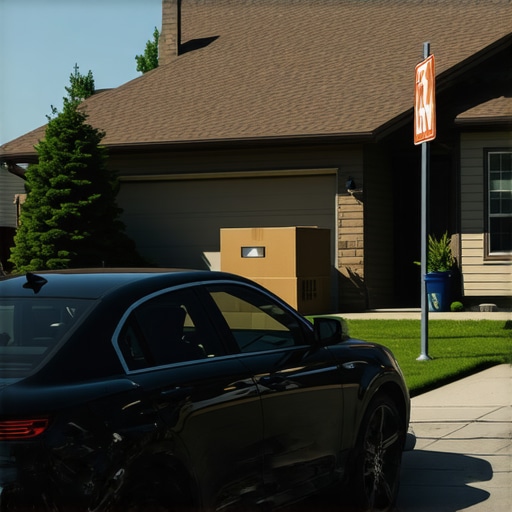
I spent a week deconstructing a high-net-worth policy after a fire. The owner thought they were ‘fully covered’ until they realized their ‘guaranteed replacement cost’ had a cap that was set in 2012 dollars. This same blind faith applies to car insurance when people move. They assume the risk is the vehicle. The risk is the location. I have audited thousands of files where a five-mile shift in residency resulted in a forty percent premium hike. The carrier does not care that you are a safe driver. The carrier cares about the mathematical probability of a loss event occurring within the specific coordinates of your new driveway. This is the brutal reality of actuarial science. Your move is not just a change of scenery. It is a relocation of the asset into a different risk pool.
The ZIP code is a mathematical prison
Car insurance rates are dictated by Territorial Loss Costs, which are calculated by actuaries using massive datasets of historical claims, litigation frequency, and local theft statistics. Moving across town places the insured asset into a new rating territory where the probability of indemnification for a loss is fundamentally higher or lower. Actuarial tables do not view you as a person. They view your car as a target in a specific geographic sector. When you move, you are likely shifting from one Insurance Services Office (ISO) territory to another. These territories are defined by claim density. If your new neighborhood has higher rates of personal injury protection (PIP) claims or uninsured motorist (UM) litigation, your premium will reflect that collective risk. The carrier calculates the pure premium based on the expected loss per exposure unit in that specific zone. If the zone has more intersections per square mile, the probability of a side-impact collision increases. This is not personal. It is forensic. The carrier is simply balancing the loss-cost ratio. If the frequency of claims in your new ZIP code is 15 percent higher than your old one, your rate will rise regardless of your personal driving record.
“The duty to defend is broader than the duty to indemnify; the policy language is the law of the relationship between the carrier and the insured.” – Contractual Law Maxim
The brutal reality of territorial rating factors
Territorial rating factors are the primary drivers of premium volatility during a move, focusing on population density, crime rates, and the frequency of litigated accidents. Carriers utilize ISO standards to assign a risk score to every street, often resulting in massive price swings within the same city. Insurance is a business of pooling risk. When you move to a more densely populated area, the number of interactions with other vehicles increases exponentially. This is the law of large numbers. More cars mean more chances for a fender bender. More cars mean more chances for a pedestrian strike. Carriers also look at the ‘judicial hellhole’ status of certain districts. Some counties are known for aggressive plaintiff attorneys and jury pools that award high damages. If you move from a conservative judicial district to one where jury awards are routinely inflated, the carrier must increase the liability portion of your premium to account for potential legal volatility. This is why business insurance and car insurance costs are so localized. The legal risk of a specific street address is a tangible line item in the underwriting software.
| Risk Factor | Urban Influence | Suburban Reality | Actuarial Impact |
|---|---|---|---|
| Litigation Density | High | Low | Pure Premium Hike |
| Theft Probability | Elevated | Minimal | Physical Damage Cost |
| Vandalism Rates | Frequent | Rare | Comprehensive Increase |
| Infrastructure Quality | Congested | Modern | Collision Frequency |
The hidden fraud tax in certain districts
Insurance fraud creates a systemic burden that carriers distribute across all policyholders within a specific geographic territory, leading to higher rates in areas with documented organized fraud rings. Moving into a high-fraud zone means you are subsidizing the criminal activities of your neighbors through your premium. I have seen internal audits from major carriers showing that certain neighborhoods have staged accident rates three times higher than the national average. When you move to such an area, the underwriter sees a red flag. They assume a percentage of every dollar paid in that ZIP code is lost to fraudulent PIP claims or inflated medical bills. This is the ‘leakage’ in the system. The carrier recovers this leakage by raising the base rate for everyone in that territory. You are paying for the lack of local law enforcement focus on insurance rings. It is a forensic certainty that your premium will reflect the ethics of the drivers surrounding you. This is why car insurance and legal insurance often overlap. The cost of defending against fraudulent claims is baked into your monthly bill.
“State insurance departments regulate the fairness of rates, but the underlying data of loss experience remains the ultimate arbiter of what an insured will pay.” – NAIC Technical Paper
The three words that kill a claim
Material misrepresentation of the garaging address is one of the most common reasons for a total claim denial, occurring when an insured fails to update their location to save money. The carrier views the address as the primary rating factor, and lying about it constitutes a breach of contract. Many people try to keep their old address after moving to a more expensive ZIP code. This is a fatal mistake. If you have an accident and the adjuster discovers you have been living at a different location for more than thirty days without notifying the carrier, they can rescind the policy. The contract is voided because the risk was not properly underwritten. The premium you paid was based on a lower risk profile that no longer existed. The carrier is not obligated to honor a contract where the fundamental terms of risk were misrepresented. I have watched families lose their homes because a six-figure liability claim was denied due to an incorrect garaging address. Do not play games with the underwriting department. The data forensics available to modern carriers will find the truth during the subrogation phase.
A checklist for the forensic policy audit
- Review the territorial rating code on your new declarations page.
- Verify that the garaging address matches the physical location of the vehicle every night.
- Analyze the uninsured motorist coverage limits relative to the local population statistics.
- Audit the comprehensive deductible against the new neighborhood theft frequency data.
- Check the state specific Valued Policy Laws if you are moving across state lines.
- Confirm the waiver of subrogation clauses in any new residential lease agreements.
Infrastructure health and the microscopic distance of risk
The quality of local infrastructure, including road maintenance, lighting, and intersection design, plays a direct role in the collision frequency statistics used by insurance underwriters to set regional rates. A move to a district with crumbling roads or poorly timed signals will inevitably lead to higher insurance costs. Actuaries study the physical environment of a ZIP code. They look at the frequency of potholes, which leads to suspension claims. They look at the lighting in public parking areas, which correlates with vehicle break-ins. They even look at the average commute time for residents in that area. If your move puts you in a territory where the average commute is 45 minutes of stop and go traffic, the probability of a rear-end collision is significantly higher than in a territory with a 10 minute commute on well-maintained roads. This is the microscopic reality of risk. Every pothole and every dark alley is accounted for in the carrier’s loss-cost model. Your rate spikes because the physical environment is hostile to the preservation of the asset. The carrier is merely pricing the environment, not the driver.