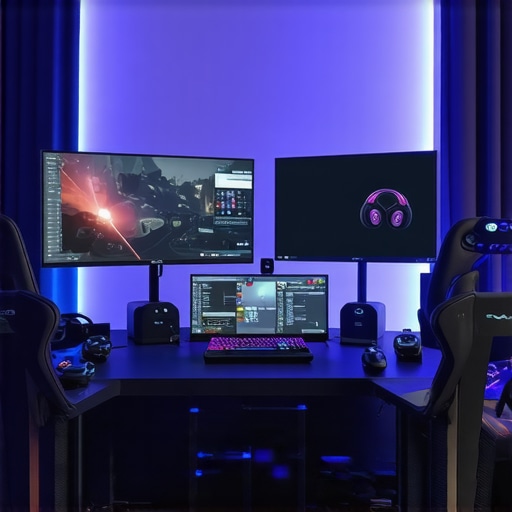
I spent a week deconstructing a high-net-worth policy after a fire. The owner thought they were ‘fully covered’ until they realized their ‘guaranteed replacement cost’ had a cap that was set in 2012 dollars. The loss involved a dual-loop, custom-cooled workstation with twin RTX 4090s and a Threadripper processor. The total build cost was north of $22,000. When the adjuster arrived, he opened a standard ISO HO-3 form and pointed to the ‘Special Limits of Liability’ section. Because the owner had mentioned his Twitch stream once during the claim interview, the carrier reclassified the entire rig as business property. The recovery check was for $2,500, less a $1,000 deductible. The owner lost $20,500 because he trusted a generic policy to protect a specialized asset. This is the reality of the insurance industry. It is a mathematical fortress designed to protect the carrier, not your silicon.
The phantom coverage of standard forms
Standard homeowners insurance policies utilize generic language that fails to account for the exponential value of high-end gaming hardware or specialized computing equipment. Most policies are written for the average consumer who owns a $600 laptop, not a liquid-cooled beast with custom manifolds and overclocked components. The standard HO-3 policy, which is the most common form in the United States, typically includes a sub-limit for electronics. This limit is often hidden deep within the policy jacket under Coverage C. While your total personal property limit might be $100,000, the specific sub-limit for ‘Electronic Data Processing Equipment’ might be capped at a fraction of that amount. This is the first trap. You are not buying protection for a high-end asset, you are buying a promise to pay for a commodity. If you have not scheduled your rig as a ‘Scheduled Personal Property’ item, you are effectively self-insuring the gap between the sub-limit and the actual value. This gap is where high-net-worth individuals lose the most capital during a total loss event.
The brutal math of depreciation
Actual Cash Value or ACV is the default valuation method for personal property in standard insurance contracts, leading to significant financial loss for tech enthusiasts. Carriers use a straight-line depreciation model that is aggressive for electronics. They do not care about the ‘scalper price’ of a GPU or the historical rarity of a specific component. They look at the typical lifespan of a computer, which they often peg at three to five years. If your rig is two years old, the carrier might apply a 40% or 50% depreciation rate. This ignores the fact that high-end components often retain value better than budget hardware. The math is simple and clinical. If your $5,000 rig is two years old, the adjuster starts with the purchase price, subtracts $2,500 for depreciation, and then subtracts your deductible. You are left with a check that cannot even buy a mid-range replacement. You must demand ‘Replacement Cost Value’ or RCV coverage, and even then, you must ensure the ‘Guaranteed’ rider is present to account for inflation in the hardware market. Insurance is not about being made whole in your mind, it is about the contractual definitions of value.
| Policy Feature | Standard HO-3 Policy | Forensic Risk Strategy |
|---|---|---|
| Valuation Method | Actual Cash Value (Depreciated) | Agreed Value or RCV |
| Electronic Sub-limits | Often $1,500 to $2,500 | Full Replacement No Limit |
| Business Use | Strictly Excluded | Permitted via Endorsement |
| Power Surge | Excluded unless Fire occurs | Equipment Breakdown Cover |
Why a power surge is a legal minefield
Most basic insurance policies specifically exclude damage caused by artificial electrical current unless the surge causes a secondary fire. This is one of the most common reasons for claim denial in the gaming community. If a transformer blows down the street and sends a spike into your 1600W power supply, frying your motherboard and CPU, the carrier will look for evidence of charring or flame. If there is no fire, they will cite the ‘Mechanical Breakdown’ or ‘Artificial Electrical Current’ exclusion. The carrier views a surge as a maintenance issue or a utility failure, not a covered peril. To bridge this risk, you need an ‘Equipment Breakdown’ endorsement. This specific piece of paper overrides the standard exclusions. Without it, your high-end gaming rig is essentially a $10,000 paperweight that the insurance company has no legal obligation to replace. They are looking for ‘proximate cause.’ If the cause is a spike and not a fire, you are out of luck.
“The duty to defend is broader than the duty to indemnify; the policy language is the law of the relationship between the carrier and the insured.” – Contractual Law Maxim
The invisible wall of business exclusions
The moment you monetize your gaming rig through streaming, content creation, or professional competition, you have transitioned from a hobbyist to a business entity. Standard homeowners insurance policies have a very low limit for ‘property used for business purposes.’ This is often capped at $2,500 for property on the premises and as little as $500 for property away from the premises. If you take your laptop to a LAN tournament and it is stolen, you are facing a massive loss. The carrier will argue that the rig is no longer personal property. They will scrutinize your tax returns and your social media presence. If they find a ‘Donate’ button on your Twitch profile, they have the leverage to deny the claim based on the ‘Business Pursuits’ exclusion. This is a cold, calculated move to limit their exposure. You must disclose this use to your agent and ensure the policy is endorsed for ‘Home-Based Business’ or move the rig to a commercial policy. The ‘best insurance’ is the one that actually pays the claim, not the one with the lowest monthly premium. Many people look for ‘car insurance’ or ‘legal insurance’ but forget that their primary wealth is often tied up in their home technology.
The forensic reality of replacement cost
Replacement cost is a term that carriers use to soothe the insured, but the fine print often limits this to ‘like kind and quality.’ For a custom-built gaming rig, ‘like kind and quality’ is a subjective nightmare. An adjuster might argue that a pre-built system from a major retailer is ‘like kind’ to your custom-water-cooled enthusiast build. They do not account for the labor hours of assembly, the premium for binned components, or the aesthetic value of custom cable routing. To an insurance company, a PC is a PC. This is why you must maintain a ‘Forensic Proof of Value.’ This includes a detailed manifest of every component, date-stamped photos of the build process, and invoices for every fitting and fan. You are building a case for a future legal battle every time you upgrade your system. If you cannot prove the specific value, the carrier will default to the lowest common denominator. They are in the business of indemnity, which means returning you to the same financial position you were in before the loss, nothing more. They will not pay for the ‘soul’ of your build.
“The policy is a contract of adhesion; ambiguities are construed against the drafter, yet clear exclusions are the carrier’s shield.” – NAIC Legal Review
A blueprint for rig indemnification
To avoid the catastrophic failure of a standard policy, you must follow a strict audit protocol. Do not trust your broker’s verbal assurances. Read the manuscript endorsements yourself. If it is not in writing, it does not exist in the eyes of the law. Here is the checklist for a forensic-level policy audit:
- Review Coverage C Special Limits for ‘Electronic Data Processing’ equipment.
- Verify if your policy is ‘Open Perils’ or ‘Named Perils’ for personal property.
- Add an ‘Equipment Breakdown’ endorsement to cover power surges without fire.
- Request ‘Replacement Cost Value’ specifically for the electronics category.
- Schedule the rig as ‘Scheduled Personal Property’ with an ‘Agreed Value’ floater.
- Ensure the ‘Business Pursuits’ exclusion is waived if you stream or compete.
- Keep a digital vault of receipts and high-resolution build photos off-site.
This is how you protect a $10,000 investment. You don’t do it with hope. You do it with contracts. The ‘best insurance’ is not found in a TV commercial with a catchy jingle. It is found in the endorsements that most people never read. If you treat your gaming rig as a major asset, you must insure it like one. The carrier is waiting for you to make a mistake in the claim process. Don’t give them the satisfaction. Be the forensic architect of your own protection.