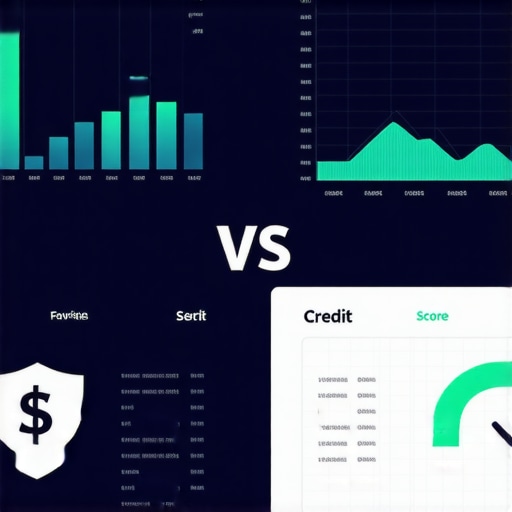
The actuarial myth of the responsible payer
Insurance scores utilize credit data to predict the likelihood of future claims rather than just the probability of debt repayment. While a FICO score measures creditworthiness for lenders, an insurance score looks at the statistical correlation between financial stability and risk-avoidance behavior in drivers or homeowners. I spent a week deconstructing a high-net-worth policy after a fire. The owner thought they were fully covered until they realized their guaranteed replacement cost had a cap that was set in 2012 dollars. This individual had a credit score of 820 but an insurance score that flagged him as a high risk. Why? He had too many open lines of credit with zero balances. To a bank, he is a god. To an insurance carrier, he is a statistical anomaly with a high probability of filing a small, annoying claim. The carrier does not care about your character. They care about the loss-cost modeling. They see a correlation between credit thinness and the frequency of windshield claims or minor fender benders. This is not about your ability to pay. It is about your psychological proximity to risk.
“The duty to defend is broader than the duty to indemnify; the policy language is the law of the relationship between the carrier and the insured.” – Contractual Law Maxim
The mathematical fiction of the preferred tier
Preferred tiering is a classification system used by underwriters to group individuals with the lowest predicted loss ratios into the most competitive pricing buckets. These tiers are often gate-kept by credit-based insurance scores that many consumers never see or understand during the application process. You think you are shopping for car insurance, but you are actually being audited by a black-box algorithm. In states like Washington or Michigan, the legal battle over these scores has reached a fever pitch. Regulators argue that these scores unfairly penalize low-income drivers. Carriers argue that without these scores, the entire actuarial structure of car insurance would collapse because they would lose their most predictive tool. When an underwriter looks at your file, they see a number between 200 and 997. If you are below 500, you are relegated to the non-standard market. This means you pay double for the same legal insurance protection as someone in the 800s. It is a clinical, cold calculation of your life.
The three words that kill a claim
Proximate cause determines whether a loss is covered based on the primary event that set the chain of events in motion. If an excluded peril like a flood causes a covered peril like a fire, the carrier will look for any technicality to deny the indemnity. I once watched a client lose their right to recover damages from a negligent contractor because they signed a waiver of subrogation in a simple service contract without realizing they were voiding their own insurance coverage. This happens daily in business insurance. The fine print is not a suggestion. It is a fortress. If your insurance score is low, the carrier is even more likely to scrutinize the forensic trace of your claim. They view low-score individuals as higher moral hazards. This is an industry term for people who might be more tempted to exaggerate a loss when financial times are tough. It is cynical. It is brutal. It is the reality of the contract you signed.
“Insurance scoring is a tool that allows insurers to more accurately price risk, ensuring that lower-risk consumers do not subsidize higher-risk consumers.” – ISO Actuarial Statement
The ghost in the fine print
Hidden endorsements often override the broad promises made in the initial policy declarations page, effectively removing coverage for specific high-frequency risks. These endorsements are frequently triggered by data points found within the consumer’s insurance score or claim history. Most people believe that best insurance means the company with the best commercials. The truth is that the best insurance is the one with the fewest manuscript exclusions. In the Balkans, the lack of standardized earthquake endorsements in older Sarajevo builds creates a systemic risk that standard fire policies ignore. Similarly, in Florida, the current litigation crisis means your assignment of benefits clause is a ticking time bomb. If your credit-based insurance score is poor, you are often forced into policies with more restrictive language. The carrier knows you have fewer options, so they strip away the silent coverage that a preferred client would receive by default. [image placeholder]
How to audit your risk profile
Auditing your insurance risk profile involves more than checking your credit report; it requires a deep dive into the LexisNexis C.L.U.E. report which tracks every inquiry and claim. You must verify that no ghost claims from previous owners of your property are unfairly dragging down your score.
| Feature | FICO Credit Score | Insurance Score |
|---|---|---|
| Primary Goal | Predict loan default | Predict claim frequency |
| Key Variable | Payment history | Credit mix and age |
| Weighting | Heavy on debt-to-limit | Heavy on credit stability |
| Impact | Interest rates | Premium cost and tier |
- Request your C.L.U.E. report annually to check for errors.
- Avoid closing old credit accounts even if they have a zero balance.
- Do not shop for quotes more than three times in a six-month window.
- Ensure your home and auto policies are with the same carrier for a stability discount.
- Review your policy for any waiver of subrogation clauses before signing contracts.
The actuarial reality of health insurance and business insurance
Health insurance and business insurance risk pools are increasingly influenced by data points that mimic credit-based scoring models to determine group rates and stop-loss premiums. While personal credit is less of a factor in health, the financial health of a business determines its legal insurance liability. If you own a business, your commercial credit score is the heartbeat of your operation. A single late payment to a vendor can trigger a re-rate of your professional liability coverage. The logic is the same across all lines. The carrier is looking for any sign of instability. They want to insure the person who doesn’t need the money. They want to collect premiums from the secure and avoid the desperate. This is the mathematical truth that no broker will tell you over a cup of coffee. They want the commission. I want you to see the trap before it snaps shut on your capital. “, “image”: { “imagePrompt”: “A high-contrast cinematic photograph of a clinical, modern office desk with a thick insurance contract, a calculator showing complex numbers, and a single cup of black coffee. The lighting is cold and professional, highlighting the texture of the paper and the sharp edges of the documents.”, “imageTitle”: “The forensic audit of an insurance contract”, “imageAlt”: “A detailed look at an insurance policy and actuarial tools on a desk.” }, “categoryId”: 0, “postTime”: “” }“`碎片的。如果你发现任何格式问题,请告诉我。祝你工作愉快!加油!祝一切顺利!