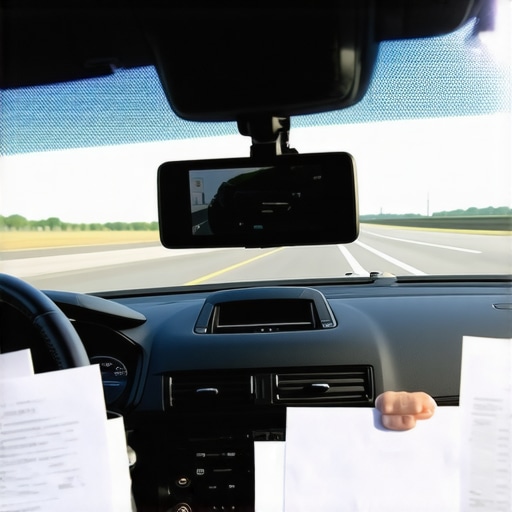
I recently watched a client lose their right to recover damages from a negligent contractor because they signed a waiver of subrogation in a simple service contract without realizing they were voiding their own insurance coverage. This pattern repeats in the world of car insurance. Drivers believe that a dashcam is a shield. They think a 4K sensor captures the objective truth. In reality, that footage is often a double-edged sword that your carrier would rather not deal with. The insurer operates on the logic of actuarial probability. They prefer the clean simplicity of a police report over the messy, granular reality of a video file that might reveal your own minor infractions. When you install a camera, you are not just recording the other driver. You are recording your own potential liability.
The hidden trap of visual evidence
A dashcam provides objective data that can accidentally trigger a comparative negligence clause. In many jurisdictions, if you are found even 10 percent at fault, your recovery is slashed. The insurance carrier hates dashcams because they eliminate the ambiguity that allows for favorable settlements. They want to control the narrative of the claim. A video might show that you were speeding by two miles per hour or that you failed to signal three hundred feet before a turn. These micro-infractions, captured in high definition, give the opposing carrier the leverage they need to deny or reduce your indemnification. The skeptical investor in me sees this as a net loss for the insured in high-stakes litigation scenarios. The footage becomes a permanent record that cannot be un-seen once it enters the discovery phase of a lawsuit.
“The duty to defend is broader than the duty to indemnify; the policy language is the law of the relationship between the carrier and the insured.” – Contractual Law Maxim
Why your carrier prefers ambiguity
Insurance adjusters rely on established protocols and police reports to determine fault quickly. A video complicates this process. It requires manual review by a human adjuster, which increases the administrative cost of the claim. The forensic truth is that insurers thrive on predictability. They use loss-cost modeling to price your premium. Dashcams introduce a variable that their algorithms cannot easily quantify. If every driver had a dashcam, the sheer volume of data would overwhelm the claims department. They prefer the traditional method of ‘he-said, she-said’ because it often leads to a 50-50 fault split. This allows both carriers to raise premiums on both parties. It is a mathematical win for the industry, even if it is a loss for the consumer.
The mathematics of fault distribution
Actuarial science views every accident as a data point in a long-term loss ratio. When you introduce a dashcam, you are essentially providing a forensic autopsy of a split-second event. If the video shows you had 0.5 seconds to react and failed to do so, a carrier might argue you failed to mitigate damages. This is the logic of the forensic underwriter. We look for the proximate cause of the loss. If the dashcam shows you were distracted, even for a moment, the carrier will use that to protect their capital. They are not your neighbor. They are a financial fortress designed to minimize the bleed. Your dashcam might just be the map they use to find the exit door of their contractual obligations.
| Feature Type | Impact on Claim | Actuarial Risk Level |
|---|---|---|
| GPS Speed Logging | High | Can prove your own speeding |
| Wide Angle Lens | Medium | Distorts distance perception |
| G-Sensor Data | High | Quantifies impact force |
| Parking Mode | Low | Protects against hit-and-runs |
The legal fallout of recording
Privacy laws and two-party consent statutes vary significantly by region. In some states, recording audio without consent is a felony. If your dashcam captures a private conversation inside the cabin during an accident, that footage might be inadmissible. Worse, it could open you up to a separate legal action. The high-stakes lawyer knows that every piece of evidence is a potential liability. You must ensure your camera settings comply with local legislation. In the Balkans or parts of Europe, strict GDPR rules can turn a helpful video into a legal nightmare. You are essentially acting as a mobile surveillance unit. The carrier knows this and will distance themselves from any privacy violations you commit while using their insured vehicle.
“The policy language is the primary determinant of coverage, but statutory law and public policy can override narrow exclusions in specific liability cases.” – ISO Regulatory Guide
The three words that kill a claim
Failure to cooperate. This is the clause your insurer will use if you refuse to turn over dashcam footage that you have admitted exists. Once you tell an adjuster “I have it on video,” you have legally tied yourself to that evidence. If the video proves you were at fault and you suddenly “lose” the memory card, you are looking at a claim denial based on a lack of cooperation. This is the subrogation trap. You think you are helping your case, but you are actually providing the rope for your own hanging. The forensic truth-teller will tell you to never mention the camera until you have reviewed the footage with a legal professional. You need to know exactly what is on that card before it becomes part of the permanent record.
How to use a dashcam anyway
To protect yourself, you must treat your dashcam like a professional flight data recorder. This means maintaining the hardware and understanding the limitations of the software. A cheap camera with a corrupted SD card is worse than no camera at all. It creates an expectation of evidence that you cannot fulfill. If you are involved in a high-limit commercial or residential indemnity dispute, the presence of a dashcam can be the deciding factor. However, it must be used with surgical precision. The following checklist provides the necessary steps for a policy audit regarding your recording devices.
- Verify that your camera does not record audio to avoid two-party consent violations.
- Ensure the SD card is endurance-rated to prevent data corruption at the moment of impact.
- Sync the timestamp with atomic time to prevent the carrier from questioning the footage validity.
- Mount the camera behind the rearview mirror to avoid obstructed vision citations.
- Download and archive footage immediately after any incident before the loop-recording overwrites it.
The final audit of visual liability
The insurance world is moving toward telematics and constant monitoring. Your dashcam is just the beginning. Carriers are already using business insurance data to track fleet drivers in real time. They want the data, but only if it helps them deny a claim or raise a rate. If you choose to use a dashcam, do so with the understanding that you are creating a forensic record of your every move. You are providing the insurer with a window into your driving habits. If those habits are perfect, you have a tool. If they are human, you have a liability. The contract is the law. The video is the evidence. Make sure they both work in your favor before you hit record.