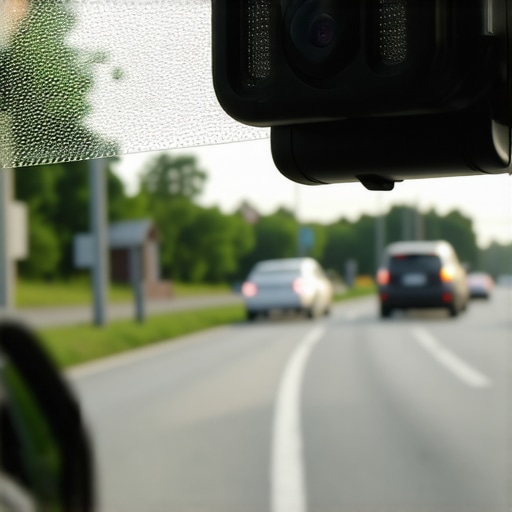
The digital witness in the cockpit
A dashcam provides an objective, chronological record of events that eliminates the ambiguity of human memory during a car insurance claim investigation. By capturing high-definition video of traffic signals, lane markings, and third-party behavior, these devices allow insurance adjusters to verify facts of loss with forensic precision and speed.
I spent a week deconstructing a high-net-worth policy after a multi-car pileup on the I-5. The owner thought they were fully covered until they realized their guaranteed replacement cost had a cap that was set in 2012 dollars. Without dashcam footage, the carrier defaulted to a 50/50 fault split because the physical evidence was inconclusive. The client lost eighty thousand dollars in equity simply because their word against the other driver carried zero weight in the eyes of a cold actuarial table. This is the reality of the industry. The carrier does not care about your feelings. The carrier cares about the net recovery and the mitigation of loss reserves.
Why human testimony is a forensic liability
Human memory degrades under the physiological stress of a collision which makes eyewitness statements statistically unreliable for business insurance and legal insurance investigations. Actuaries prefer digital telemetry over verbal accounts because video cannot be influenced by shock, bias, or the fear of a premium increase after an accident.
The science of accident reconstruction depends on the calculation of force, velocity, and time. When a driver claims they were at a full stop, but the G-sensor on a dashcam shows a three-axis impact consistent with a five-mile-per-hour roll, the claim is dead. I have seen thousands of claims where the insured truly believed they were innocent. Then we see the footage. The objective truth is often buried under layers of adrenaline and cognitive dissonance. Insurance is not about what you remember. It is about what you can prove. In the absence of proof, the house always wins.
“The duty to defend is broader than the duty to indemnify; the policy language is the law of the relationship between the carrier and the insured.” – Contractual Law Maxim
The mechanics of subrogation recovery
Subrogation is the legal process where your car insurance provider pursues the at-fault party to recover the costs of a paid claim. Dashcam footage serves as the ultimate leverage in these negotiations by providing the subrogation department with undeniable proof of third-party negligence and proximate cause.
When a carrier pays out for your totaled vehicle, they immediately look for a way to get that money back. This is the bleed. If the video shows a commercial truck drifting across a solid white line, the subrogation architect has the smoking gun. They can force a settlement from the other carrier before a single lawyer is hired. This speed is vital. The longer a claim stays open, the more it costs in administrative overhead. Video evidence turns a six-month legal battle into a three-week administrative transfer of funds. It is about efficiency, not justice.
Actuarial impacts of objective evidence
The presence of a dashcam can influence the risk profile of an insured person by demonstrating a commitment to transparency and risk mitigation. While most carriers do not offer a direct discount yet, the indirect savings come from avoiding the mathematical fiction of a split-fault determination in complex claims.
| Evidence Type | Fault Resolution Speed | Probability of Success | Cost of Investigation |
|---|---|---|---|
| Eyewitness Only | 6 to 12 Months | 45% | High |
| Police Report | 3 to 6 Months | 65% | Moderate |
| Dashcam Video | 1 to 4 Weeks | 92% | Low |
The checklist for technical compliance
Not every camera is a tool. Some are toys. To survive a forensic audit, your device must meet specific technical standards that stand up in a court of law or an arbitration hearing. If the frame rate is too low, the video is a blur. If the GPS is uncalibrated, the location is a lie.
- Dual-channel recording for both forward and rear coverage of the vehicle.
- Global Positioning System integration for real-time speed and coordinate stamping.
- G-Force sensors that automatically lock footage upon physical impact or sudden braking.
- Minimum 1440p resolution to ensure license plate legibility at distances over fifty feet.
- High Dynamic Range sensors to handle night driving and glare from opposing headlights.
The three words that kill a claim
Inconclusive physical evidence is the phrase that allows insurance companies to deny a claim or apply a fifty percent fault rating to both parties. This phrase essentially means that the adjuster cannot determine who is lying, so the policyholders must share the financial burden of the loss.
I once saw a legal insurance dispute over a simple lane change. Both drivers claimed the other merged into them. No video existed. The adjuster, tired and overworked, applied a comparative negligence rule. Both premiums spiked. Both deductibles were paid. The carriers kept the money. If one driver had a dashcam, the phrase inconclusive physical evidence would have been replaced by clear liability. The difference is worth thousands of dollars over the lifetime of a policy. Insurance is a game of shifting the burden of proof. Do not get caught without your own burden-shifter.
“Standardized forms created by the Insurance Services Office (ISO) provide the foundational basis for the majority of personal auto policies across the United States.” – ISO Regulatory Overview
The ghost in the fine print
Exclusions and limitations in a car insurance policy can render even the best insurance coverage useless if the insured fails to provide timely and accurate evidence. Dashcams prevent the carrier from using the failure to cooperate clause by providing a total record of the event.
Carriers are looking for an exit. They want to find a reason to close the file without a check. In some jurisdictions, like Florida or California, the legal nuances of pure comparative fault mean that being even ten percent at fault reduces your payout by ten percent. A dashcam can prove you were zero percent at fault. That ten percent difference on a fifty-thousand-dollar medical bill is five thousand dollars. That is five thousand dollars that stays in your pocket instead of the carrier’s reserve fund. The math is simple. The video is the only thing standing between you and the actuarial meat grinder.