The autopsy of a perfect driving record
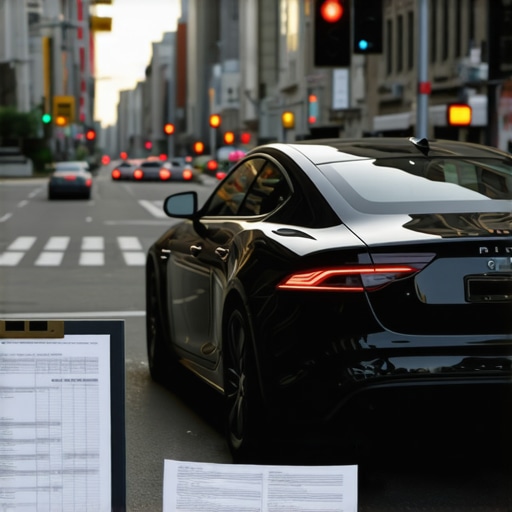
I spent a week deconstructing a high-net-worth policy after a fire. The owner thought they were fully covered until they realized their guaranteed replacement cost had a cap that was set in 2012 dollars. This same mathematical decay is happening to your auto policy right now. You have no tickets. You have no claims. Yet, your renewal notice just arrived with a 22 percent increase that feels like a personal insult. The industry calls this a rate adjustment. I call it the price of systemic fragility. Your premium is not a reflection of your driving. It is a reflection of the carriers inability to predict the soaring cost of physical reality. Last year, a major insurer in the Midwest processed a claim for a minor rear-end collision on a 2023 electric sedan. In 2015, that repair would have cost 1,200 dollars for a bumper cover and paint. In 2024, because of the calibration requirements for the Advanced Driver Assistance Systems and the replacement of three ultrasonic sensors, the bill came to 7,400 dollars. The carrier lost money on that policy for the last five years in three seconds. You are paying for that sensor.
The math behind the disappearing safety discount
Car insurance premiums rise without accidents because of rising loss costs, social inflation, and the technological complexity of modern vehicles. Carriers use actuarial modeling to set rates based on the aggregate risk of the entire pool, meaning your clean record is offset by the increasing severity of national claims.
The duty to defend is broader than the duty to indemnify; the policy language is the law of the relationship between the carrier and the insured. – Contractual Law Maxim
The ghost in the fine print
Insurance is a game of probability where the house is currently losing. Carriers look at the combined ratio, which is the sum of incurred losses and expenses divided by earned premium. When that ratio goes above 100, the company is bleeding cash. To fix the bleed, they do not just look at your driving. They look at the cost of steel. They look at the hourly rate of a master technician in your zip code. They look at the price of a rental car, which has spiked 40 percent in many markets. Your car insurance policy is a contract for future services, and the cost of those services is skyrocketing. The best insurance companies are no longer competing on price. They are competing on their ability to survive the next quarter without a credit rating downgrade. If you live in a high-density area like Los Angeles or Miami, you are also paying a litigation tax. The frequency of attorney representation in small claims has transformed simple fender benders into multi-million dollar bodily injury demands. This is social inflation. It is the invisible force that pushes your premium up even when your car stays in the garage.
Why your full coverage is a mathematical fiction
The term full coverage does not exist in the legal world. It is a marketing term used to make you feel safe while the carrier strips away silent coverage in the endorsements. Most policies now include strict limits on original equipment manufacturer parts. If you wreck your new car, the carrier will fight to put used or aftermarket parts on it to save their margins. This is the actuarial zooming that most people miss. They see the premium, but they do not see the diminished value of the contract.
Insurance regulation is designed to ensure that rates are not excessive, inadequate, or unfairly discriminatory, yet the definition of adequacy is shifting toward carrier solvency over consumer affordability. – NAIC Technical Paper Analysis
The three words that kill a claim
Actual Cash Value. These three words are the reason your insurance feels like a scam when you finally use it. If your car is totaled, the carrier owes you what the car was worth the second before the crash, not what it costs to buy a new one. With the volatility of the used car market, this gap has become a canyon. You might owe 30,000 dollars on a loan for a car that the market now says is worth 22,000 dollars. Without a specific gap endorsement, you are responsible for that 8,000 dollar deficit. This is why business insurance experts always tell clients to read the manuscript endorsements. The standard forms are designed for the average person, and the average person is chronically underinsured. In regions like Florida, the litigation crisis has reached a point where carriers are simply leaving the state. This reduces competition and allows the remaining players to hike rates with impunity. They are not targeting you. They are trying to build a capital fortress against a sea of rising costs.
The impact of loss cost trends
| Expense Component | 3-Year Cost Increase | Impact on Premium |
|---|---|---|
| Labor Rates | 18% | Moderate |
| Electronic Components | 34% | High |
| Legal Defense Fees | 22% | High |
| Rental Reimbursement | 41% | Moderate |
The policy audit checklist
- Verify the annual mileage is accurate. If you work from home now, your rate should reflect it.
- Check for the replacement cost versus actual cash value endorsement.
- Audit the excluded drivers list to ensure no ghost risks are hiking your rate.
- Review the deductible. Raising a deductible from 500 to 1,000 dollars can offset a 15 percent rate hike.
- Confirm any telematics discounts are actually being applied to the final line item.
The legal reality of the risk pool
The carrier is not your neighbor. The carrier is a forensic entity designed to minimize indemnity spend. When legal insurance and car insurance collide, the result is usually a redacted document that favors the house. If you want the best insurance, you have to stop looking at the monthly price and start looking at the solvency of the carrier and the specific wording of the exclusions. The reason your premium rose is that the world became more expensive to repair, more litigious to navigate, and more volatile to predict. Your clean record is a shield, but the shield is getting thinner as the fire gets hotter. Stop blaming your driving. Start looking at the math of the herd.