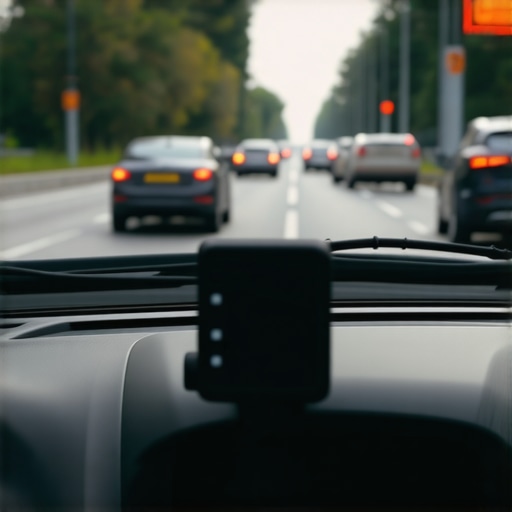
The forensic reality of a multi-car crash is rarely found in the statements given to a patrol officer on the shoulder of a rain-slicked highway. It is found in the metadata of a high-endurance SD card. I smell the stale aroma of burnt coffee and the metallic tang of an airbag deployment every time I open a claim file that has been mangled by conflicting testimonies. I watched a client lose their right to recover damages from a negligent contractor because they signed a waiver of subrogation in a simple service contract without realizing they were voiding their own insurance coverage. That loss was a choice. In the same vein, entering a multi-car pileup without a dashcam is a choice to let the insurance carrier dictate your financial ruin. I recently audited a file involving a five-vehicle stack on the I-5. The lead driver claimed my client initiated the contact. The police report, written by an exhausted officer who arrived forty minutes late, corroborated that lie. Without the 4K video showing my client was at a full stop for three seconds before the heavy truck behind them triggered the kinetic transfer, my client would have been on the hook for two hundred thousand dollars in property damage and medical payouts. The camera does not have an incentive to lie. The carrier does.
The digital eye that survives the impact
Dashcam evidence in multi-car crashes functions as the definitive legal insurance by providing an objective record of proximate cause. This technology captures the sequence of impact, vehicle velocity, and the presence of phantom vehicles. Insurance adjusters utilize this data to assign comparative negligence percentages and validate car insurance claims accurately. The visual record serves as the primary tool for forensic underwriters to determine if a driver fulfilled their duty of care before the collision occurred. Most motorists assume the truth is self-evident. It is not. The truth is a contested territory. In a multi-car event, the carrier for the rear-most vehicle will attempt to distribute the loss-cost across every participant. They want to dilute their liability. Your dashcam prevents this dilution by pinning the negligence to the specific frame where the safety gap was breached. This is the difference between a total loss and a full recovery.
The math of the middle vehicle
Liability for middle vehicles in a chain-reaction collision depends entirely on the timing of the impact and the braking distance maintained. Dashcams provide telemetry data that proves whether a vehicle was pushed into the car ahead or if it struck the car ahead first. This distinction is the decisive factor in legal insurance disputes and car insurance subrogation. Without video, the law of the road often defaults to the assumption that the middle car was following too closely. This is a mathematical fiction that ignores the reality of momentum transfer. If you are the third car in a four-car pileup, you are a target. The car in front will claim they felt two hits. The car behind will claim you stopped too fast. The dashcam record of your front and rear view is the only shield against these dual-pronged attacks. It allows for a forensic autopsy of the event, isolating each collision into its own actuarial box.
| Feature | Actuarial Value | Legal Admissibility | Technical Requirement |
|---|---|---|---|
| 4K Resolution | High | Primary Evidence | 3840×2160 pixels |
| GPS Logging | Critical | Location/Speed Proof | Internal GPS Module |
| G-Sensor | High | Impact Force Mapping | Locked Event Files |
| Dual Channel | Maximum | 360-Degree Context | Front and Rear Camera |
A liability autopsy through frame analysis
Forensic video analysis allows insurance adjusters and legal counsel to calculate the speed of impact through fixed-point reference. By measuring the time it takes for a vehicle to pass stationary objects like lane markings, experts determine contributory negligence. This process is essential for securing the best insurance outcomes in complex multi-car pileups where health insurance subrogation is involved. The frame rate of your camera is a legal weapon. A 60-frame-per-second recording provides a granular view of the split second when a driver hit their brakes. It shows the brake lights of the vehicle three cars ahead. It shows the moment the distracted driver behind you looked down at their phone. This is the data that wins lawsuits. It turns a he-said-she-said nightmare into a math problem that the defense cannot solve.
“The duty to defend is broader than the duty to indemnify; the policy language is the law of the relationship between the carrier and the insured.” – Contractual Law Maxim
I have seen carriers attempt to deny a claim based on a misrepresentation of facts simply because the insured forgot a detail under the stress of the crash. The dashcam removes the human element of error. It provides a static truth that does not fade with time or trauma. In states like Florida or California, where pure comparative fault rules apply, even being found five percent at fault can cost you thousands. The camera is the only way to get that percentage to zero. It is an investment in your own indemnity. The cost of a high-quality camera is a fraction of the deductible you will pay if you are wrongly blamed for a pileup.
The trap of the partial recording
Incomplete dashcam footage can be as dangerous as no footage because it allows opposing counsel to argue spoliation of evidence. To ensure the best insurance protection, the camera must feature loop recording, high-endurance storage, and buffered parking mode. These technical specifications are the fundamental requirements for any driver seeking to use video in a car insurance or legal insurance defense. If your camera cuts out because the SD card was full or the battery failed, the court may assume you deleted the incriminating parts. You need a capacitor-powered unit that survives the extreme heat of a car interior. You need a card that can handle the constant write-cycles of high-definition video. If the hardware fails at the moment of impact, the entire investment was for nothing.
- Hardwire the camera to the fuse box for uninterrupted power.
- Use a high-endurance microSD card specifically designed for dashcams.
- Enable the G-sensor to lock files during a collision event.
- Format the memory card once a month to prevent file corruption.
- Ensure the timestamp is synchronized with GPS time for legal validity.
“Insurance is a contract of adhesion; ambiguities are construed against the drafter, but clarity is the shield of the insured.” – ISO Regulatory Standard Reference
The subrogation leverage you never knew you had
Insurance subrogation is the process where your car insurance carrier pursues the at-fault party to recover the money paid for your claim. Dashcam video provides the indisputable proof needed to force an at-fault carrier to settle quickly without litigation. This evidence streamlines business insurance disputes and protects your claims history from unfair premium increases. When your adjuster sends a video file to the other company, the game changes. The other carrier sees the cost of a losing trial and they move to settle. They know that a jury will believe the video over their insured’s lies. This leverage is what keeps your premiums low and your record clean. It is the silent partner in your insurance policy that works for you when the world goes sideways. [IMAGE_PLACEHOLDER]
The math of the sequence
In a multi-car crash, the physics of the first impact dictates the movement of every subsequent vehicle. If the first car brakes hard and is struck by the second, which is then struck by the third, the liability is split. But if the third car hits the second and pushes it into the first, the third car carries the full weight. Without a camera, the second driver is often blamed for hitting the first car. This is the subrogation trap. The second driver’s carrier will pay out for the first car’s damage and then try to raise the second driver’s rates. A dual-channel dashcam proves the second car was stationary or slowing before the rear impact. It shifts the entire financial burden back to the third driver where it belongs. This is the forensic truth that keeps you from paying for someone else’s mistake. It is the clinical reality of risk management in the modern era.